
In this guide (8 sections)
- Key Takeaways
- Estimated monthly and two-year hiring costs
- What Are The Recruitment Cost (Agency Fees) Associated With Hiring An Indonesian Maid?
- Placement-fee repayment through salary deductions
- Placement fees and maid loans
- Suria Employment Agency: Experience Indonesian Domestic Helpers
- Choose a Placement Route That Fits Your Household
- Frequently Asked Questions
Indonesian maid recruitment fees in Singapore are a one-off placement cost, separate from a helper’s monthly salary and ongoing household expenses. Your total hiring budget also depends on the recruitment route and recurring costs such as salary, levy and insurance, so the placement fee alone does not show the full cost of employing a helper over time.
It is reasonable to want a clear breakdown before deciding. This article explains what recruitment fees may cover, how placement costs fit into monthly and two-year budgeting, and how repayment through salary deductions can affect a helper’s take-home pay. It also separates one-off hiring expenses from regular employment costs, so you can place each figure in the right part of your budget.
Overseas recruitment and hiring a helper already in Singapore can involve different cost components. Repayment arrangements also matter when assessing the overall cost. Understanding these details helps you plan for the expenses involved before proceeding.
Key Takeaways
- Separate one-off recruitment and placement expenses from recurring costs such as salary, levy and insurance when planning your budget.
- Review which services and recruitment expenses are included in an agency fee so you can understand what the charge covers.
- Account for salary deductions used to repay a placement fee, as they affect the helper’s take-home pay during the repayment period.
- Consider how the hiring route affects the cost breakdown, then choose the option that fits your household’s needs and budget.
Estimated monthly and two-year hiring costs
Build your budget by separating government charges, recruitment services and recurring household expenses. The hiring route and services included determine which one-off costs apply.
Upfront Hiring Expenses
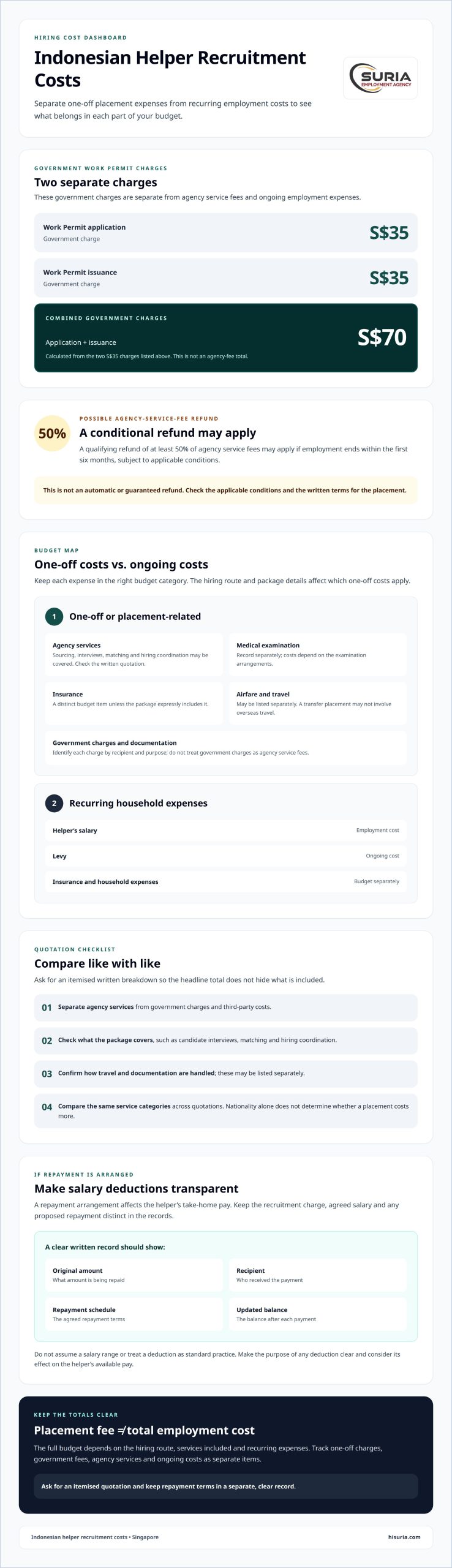
Upfront hiring expenses are payments and arrangements made before or around a helper’s placement. Singapore charges S$35 to apply for an Indonesian domestic worker’s Work Permit and S$35 to issue it, according to the Ministry of Manpower Singapore. These are government charges, separate from agency service fees and ongoing employment expenses.
List each payment by recipient and purpose. This helps distinguish government charges from recruitment services and other costs, and shows which expenses arise only once. A written breakdown also makes it easier to track payments due at each stage of hiring.
Medical and Insurance Costs
Medical examinations and insurance are separate budget items associated with employing a helper. Costs depend on the examination arrangements and insurance coverage selected, so do not assume they are included in an agency fee or are government charges.
Record examination and insurance costs separately from recruitment fees. This shows which payment covers the medical assessment and which provides insurance coverage. Separate records also help distinguish initial hiring expenses from recurring costs.
Airfare and Recruitment Expenses
Airfare and recruitment expenses relate to different parts of an overseas placement. Travel costs depend on the helper’s journey arrangements, while recruitment expenses cover the services and coordination involved in the placement.
Request an itemised breakdown separating travel, agency services and other charges. It should show whether airfare is included or billed separately, so travel expenses are not mistaken for the agency’s service fee. A transfer placement may not involve overseas travel.
For monthly and two-year budgeting, keep salary, levy, insurance and household expenses separate from one-off hiring charges. This gives you a clearer picture of ongoing costs without treating an estimate as a fixed government amount.
What Are The Recruitment Cost (Agency Fees) Associated With Hiring An Indonesian Maid?
Agency recruitment fees cover placement services, while government charges and other expenses may be billed separately. The hiring route and package details determine what each quotation includes.
One-Off Agency Recruitment Costs
A one-off recruitment fee pays for agency work connected with sourcing, interviewing and matching a helper. Its breakdown matters because an overseas hire and a transfer helper already in Singapore involve different arrangements. Request an itemised quotation showing agency services separately from government charges and third-party costs. A qualifying refund of at least 50% of agency service fees may apply if employment ends within the first six months, subject to applicable conditions.
Agency Package Inclusions
An agency package sets out the services covered by its fee. These may include candidate interviews, matching and hiring coordination; travel or documentation may be listed separately. Personal accident insurance is also a distinct cost unless the package expressly includes it.
Use the written breakdown to identify the recipient and purpose of each charge. This makes it easier to compare packages based on equivalent services, rather than headline totals alone.
Comparing Recruitment Fees
There is no single fee comparison that applies to Indonesian, Filipino and Myanmar helpers. The recruitment route and included services can affect a quotation, so nationality alone does not determine whether a placement costs more.
Compare the same categories across quotations, such as candidate matching, paperwork and travel arrangements. Keep salary separate from placement fees: salary is for employment, while the placement fee covers recruitment services.
Agency Fee Rules and Verification
For agency licence details, consult the Ministry of Manpower’s Employment Agencies Directory. Request an itemised written quotation that distinguishes agency services from government charges. An agency quotation is not a government fee schedule.
For concerns about an agency, use the Ministry of Manpower’s official complaint channels. A directory entry or quotation serves a different purpose from a complaint process, so keep these checks separate when assessing a hiring arrangement.
Placement-fee repayment through salary deductions
A repayment arrangement affects the amount a helper receives after deductions, so understand its terms before including it in your household budget. Keep the placement charge, the helper’s salary and any proposed repayment record distinct. This makes it easier to see what the helper is paid for work and what amount, if any, is being applied to repayment.
Salary guidance and recruitment charges are separate matters. Salary reflects the employment arrangement; a placement fee relates to recruitment. Do not use an assumed salary range to calculate an instalment or present a deduction as standard agency practice. The amount and terms should be clear to everyone involved.
A written record should state the original amount, who received it, the repayment schedule and the balance after each payment. If a salary statement shows a deduction, describe its purpose clearly. Accurate records help prevent a repayment entry from being mistaken for a change to the agreed salary or another household expense.
Consider how a proposed deduction affects the helper’s available pay for personal expenses. A repayment plan that is difficult to follow can cause confusion, particularly if the arrangement changes or employment ends before the stated balance is cleared. Keep the record updated so both parties can understand the remaining amount and each entry.
Before including a repayment arrangement in your hiring budget, separate it from recurring employer costs such as salary, levy and insurance. This clarifies the household’s expenses and keeps the helper’s pay records understandable. If placement involves borrowing, record the lender and repayment terms separately from agency charges.
Placement fees and maid loans
A placement fee pays for recruitment and placement arrangements; a maid loan is borrowing used to meet a cost. The distinction matters because the household, agency and domestic worker may have different payment responsibilities. Indonesian authorities’ zero placement-fee policy places the placement fee for new Indonesian workers coming to Singapore on employers, rather than workers. This does not make every separate loan or agency charge the same thing.
Identify who owes each amount and who receives payment. A recruitment fee, a loan advanced to a worker and an employer’s security bond are separate financial items. Combining them under “agency fees” can obscure the placement cost and cause confusion about salary deductions.
Indonesia’s Law No. 18 of 2017 bars individuals from carrying out overseas worker placements. This matters when considering who arranged recruitment and any related borrowing. A worker’s debt should not automatically be treated as the employer’s placement fee, and a placement fee should not be described as a worker loan without evidence of borrowing.
If a repayment arrangement involves salary deductions, the written terms should state the original amount, recipient, deduction amount and expected repayment period. For example, showing a placement charge separately from each salary deduction lets both parties see whether the deduction is reducing a debt or paying another expense. Clear records also distinguish gross salary from take-home pay.
Keep any personal borrowing separate from the recruitment agreement. The lender, repayment terms and loan’s connection to placement affect how it should be understood. In practice, record placement charges, worker debt, salary and the security bond separately. This makes hiring costs easier to review and reduces the risk of treating a worker’s repayment as an agency fee or employer expense.
Suria Employment Agency: Experience Indonesian Domestic Helpers
Suria Employment Agency helps households with Indonesian domestic helper recruitment and new maid placement. Turn to its placement service when you want help matching a helper to your household’s needs and coordinating the hiring process. Understanding fee components and repayment arrangements can help you discuss the placement clearly and plan your budget.
Share your household’s care needs, preferred experience and expectations for the role. This gives the agency a practical basis for matching you with a suitable Indonesian helper and explaining the placement arrangements. If you have already identified a helper, Suria also provides Direct Hire Services to manage the relevant processing.
For guidance on Indonesian helper placement, contact Suria Employment Agency.
Choose a Placement Route That Fits Your Household
Understanding Indonesian maid recruitment fees in Singapore is one part of planning a suitable hire. Next, consider which recruitment route and helper experience fit your household’s needs. A clear discussion of your care priorities, routines and expectations can help guide the decision before placement begins.
Suria Employment Agency provides Job Placement Services for New & Transfer Maids for different hiring situations. It also offers Home Leave Processing for employers managing arrangements after placement. Consider the support you need, then discuss the household requirements that will guide the next step.
A considered placement starts with a clear picture of the role and the support required. Contact Suria Employment Agency to discuss your Indonesian helper placement and move forward with a plan suited to your household.
Frequently Asked Questions
What Other Costs Should Employers Budget For?
Budget separately for salary, levy, insurance, medical expenses, food and household living costs. These ongoing expenses are distinct from one-off recruitment arrangements, and combining them can obscure the continuing commitment. When comparing placements, consider both initial charges and regular employment costs. The household’s levy rate and agreed salary affect the monthly budget.
Why Do Indonesian Maid Agency Fees Differ By Helper Type?
Fees can differ because the recruitment route changes the work involved. An overseas hire may require coordination before arrival, while a transfer helper is already in Singapore and follows a different placement process. Experience and the services included in the package can also affect the scope of agency work. Compare itemised quotations that describe the same hiring route and included services.
What are typical Indonesian maid recruitment fees in Singapore in 2026?
Indonesian maid recruitment fees in Singapore in 2026 depend on the placement route and the services included, so one figure will not describe every arrangement. A useful estimate starts with a written breakdown separating agency services from travel, documentation and other costs. Check whether each amount is a one-off charge or a recurring expense, and avoid treating salary or levy as recruitment fees.
What is included in the maid agency fee for hiring an Indonesian domestic worker in Singapore?
An agency fee may cover candidate sourcing, interviews, matching and hiring coordination. Administrative tasks, travel, medical examinations and insurance may be included or charged separately, depending on the package. Request a written itemisation of services and exclusions. For example, the quotation should make clear whether document processing is part of the agency service or billed separately.
How much are Indonesian maid placement fees, training fees, and documentation costs?
Costs depend on the placement arrangement and services required. Keep placement, training and documentation as separate budget lines because they relate to different activities and may have different payment recipients. Paperwork for a new hire, for example, may differ from processing documents for a helper already in Singapore. An itemised breakdown shows what each charge covers without confusing it with salary.
What happens at each stage when an agency handles the hiring process for an Indonesian maid?
Suria discusses your household’s needs and helps match you with suitable Indonesian helper candidates. The agency supports interviews and matching, coordinates the agreed placement, and handles relevant hiring paperwork and Work Permit processes. Once the helper arrives or transfers, the employment arrangement begins. The route and required documentation differ for an overseas hire and a helper already in Singapore.
Disclaimer
The articles published on this website are provided for general informational purposes only. While we strive to keep the information accurate and up to date, we make no warranties regarding its completeness, reliability, or accuracy. Readers should verify information independently and seek qualified professional advice when appropriate. Any reliance on this content is at the reader's own risk.
Need help hiring a helper?
Our consultants will shortlist suitable helpers and handle the MOM paperwork for you.