
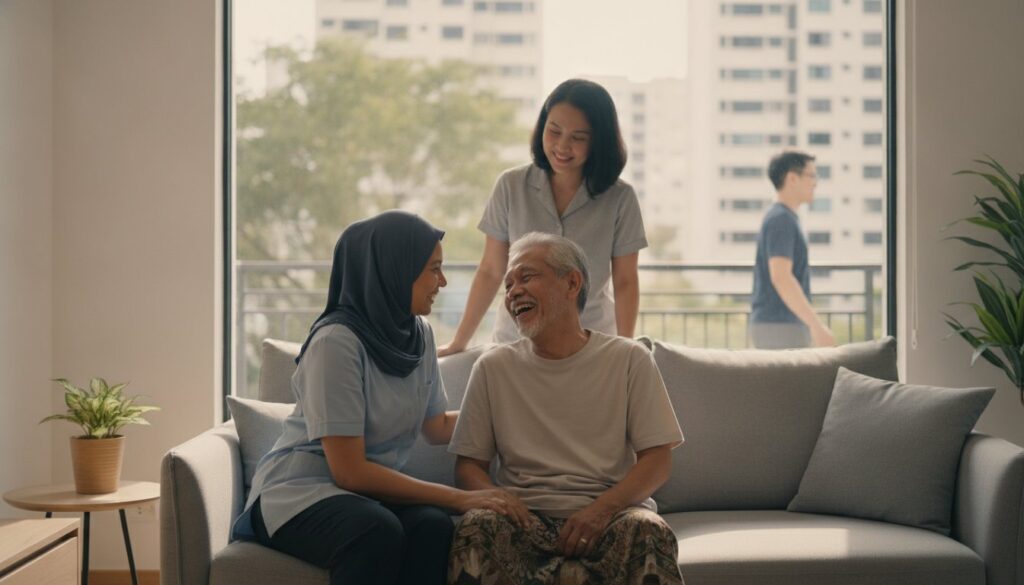
Imagine your father’s face when he realizes he can stay in his own home instead of moving to a nursing facility. It’s a moment of relief, yet it’s often followed by your own wave of anxiety about the logistics. You want the best for your parents, but the process of hiring a helper for elderly care singapore often feels overwhelming when balanced against complex paperwork and emotional guilt. The fear of a poor match is real, and the weight of this decision is something every caring child feels.
Finding the right support means looking for a new member of your family, not just an employee. This 2026 guide simplifies the journey by walking you through MOM regulations, levy concessions, and the art of screening for specialized caregiving skills. Discover how to secure a safe, caring environment for your loved ones while regaining your own peace of mind. We’ll cover everything from financial grants to cultural compatibility to ensure your family’s transition is seamless.
Key Takeaways
- Evaluate the personalized benefits of live-in assistance versus nursing homes to ensure your parent remains comfortable and supported in their own environment.
- Navigate the legal landscape of hiring a helper for elderly care singapore by understanding MOM requirements, mandatory costs, and available financial grants for 2026.
- Streamline your search by choosing between a transfer maid for immediate support or a new placement through a specialized agency like Suria.
- Leverage cultural synergy with Indonesian helpers and utilize the Caregivers Training Grant (CTG) to further enhance your helper’s specialized caregiving skills.
Assessing Your Needs: Is Hiring a Helper the Right Choice for Elderly Care?
Deciding between a nursing home and home-based care is a deeply personal choice. In Singapore, a Migrant Domestic Worker (MDW) often serves as the heartbeat of the home; providing 24/7 companionship that institutional settings lack. While nursing homes offer clinical supervision, they often come with higher monthly costs and the emotional weight of relocation. Choosing to age in place by hiring a helper for elderly care singapore allows your parent to remain in a familiar environment, surrounded by their own memories and routines.
Your first step involves evaluating your loved one’s mobility. An ambulant senior might only need help with light housework and meal preparation. However, wheelchair-bound or bedbound parents require a helper with physical strength and specific transfer techniques. Addressing the emotional transition is equally vital. It’s natural for seniors to feel anxious about a new person in their private space; so focusing on a slow, respectful introduction helps build the necessary trust for a successful long-term arrangement.
Identifying the Required Level of Care
Start by listing the Activities of Daily Living (ADLs) your parent struggles with. A helper can provide essential support with toileting, bathing, feeding, and dressing. If your family is dealing with complex conditions like dementia or requires insulin administration, you must prioritize candidates with specialized experience. Matching these specific medical needs with a helper’s skill set ensures your parent receives safe, competent care without the stress of constant errors.
Evaluating Home Suitability and Supervision
Successful caregiving requires a supportive environment for the helper too. MOM regulations mandate that you provide adequate privacy, a separate sleeping space, and sufficient nutrition. As an employer, your role involves managing her daily routine and monitoring her welfare. Maintaining a clear schedule prevents burnout; ensuring your helper remains refreshed and capable of providing the high-quality care your parent deserves.
Singapore Regulations: MOM Requirements and Financial Grants in 2026
Starting the process of hiring a helper for elderly care singapore requires a clear understanding of the Ministry of Manpower (MOM) framework. If you’re a first-time employer, you’ll need to complete the Employer’s Orientation Programme (EOP). This session ensures you understand your legal obligations and your helper’s rights. Managing mandatory costs like monthly salary, insurance, and the security bond can feel complex at first. A licensed agency acts as a bridge; handling these administrative hurdles so you can focus on your family’s needs. For those starting from scratch, a new maid placement singapore offers a fresh beginning with a candidate screened specifically for your household requirements.
Applying for the Levy Concession and Grants
Financial planning is a cornerstone of sustainable home care. Families often qualify for a concessionary levy rate of $60 per month if the care recipient is a Singapore Citizen aged 67 or older. You should also explore the Home Caregiving Grant (HCG), which provides monthly payouts to offset caregiving expenses. These subsidies significantly reduce the financial burden, making long-term home care more accessible for middle-income households. Our team at Suria Employment Agency often helps families verify their eligibility for these schemes during the initial application process.
Mandatory Insurance and Security Bonds
MOM requires a $5,000 security bond for non-Malaysian helpers to ensure compliance with work permit conditions. You don’t usually pay this upfront in cash; instead, you purchase a bond from an insurer as part of your helper’s documentation. Selecting the right medical and personal accident insurance is equally critical. In 2026, ensure your policy meets the updated minimum coverage requirements for hospitalization and surgical expenses. This protection shields your family from unexpected medical bills while ensuring your helper receives proper treatment if she falls ill.
How to Hire a Helper for Elderly Care: A Step-by-Step Roadmap
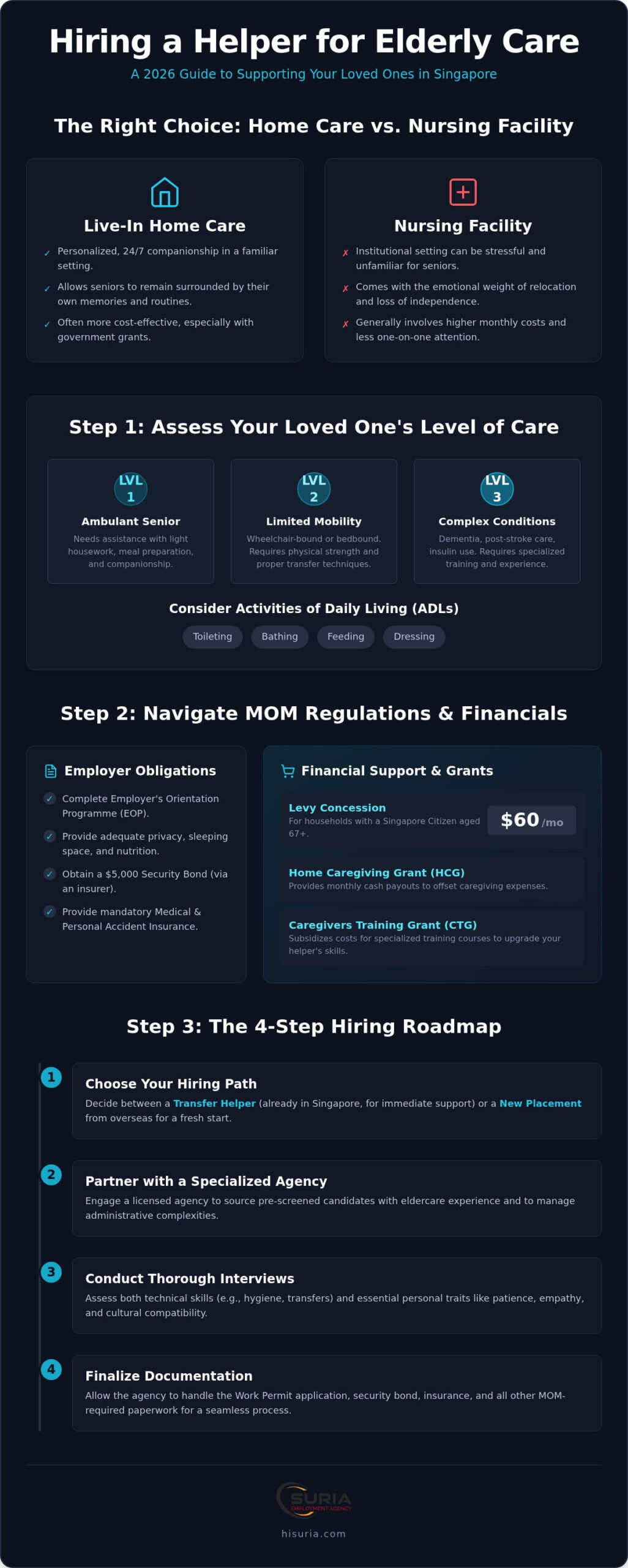
Securing reliable help involves a structured approach. Your first step is deciding between a transfer maid singapore for immediate assistance or a new placement from overseas. Second, partner with a specialized agency like Suria to source candidates with specific eldercare experience. Third, conduct thorough interviews focusing on both temperament and technical skills. Finally, let the agency handle the documentation, including work permit applications and medical check-ups. This roadmap makes hiring a helper for elderly care singapore a stress-free experience for your family.
Screening for Caregiving Experience
Identifying the right candidate requires looking beyond a basic resume. Focus on ‘Ex-Singapore’ or ‘Ex-Taiwan’ helpers; these individuals often have formal exposure to elderly care within similar cultural contexts. If your parent is managing conditions like stroke recovery or Parkinson’s, verify if the candidate has handled these specific needs before. Ask for details on how they assisted with mobility aids or followed medical regimes to gauge their practical competence.
Top Interview Questions for Caregiving Helpers
Interviews are your best opportunity to assess temperament. Use these targeted questions to find the right fit for your household:
- How do you handle a senior who refuses to take their medication?
- Can you describe your routine for safely assisting someone into a wheelchair?
- What would you do if the senior falls while you’re alone with them?
- How do you keep a senior engaged and active during the day?
- What’s your experience with special dietary requirements for seniors?
Observe non-verbal cues like patience and communication clarity. A helper’s ability to respond with empathy is often as important as her technical skills. If you’re ready to begin hiring a helper for elderly care singapore, contact our placement specialists to find the perfect fit for your home.
Ensuring Long-Term Success: Training and Cultural Integration
Achieving long-term stability after hiring a helper for elderly care singapore depends heavily on the first few months of integration. Building a sustainable daily routine is essential for success. You must balance intensive caregiving duties with secondary household chores to prevent physical and mental exhaustion. A few ways to support this transition include:
- Providing a clear, written schedule for medication, meals, and exercises.
- Defining specific rest periods to prevent helper burnout.
- Establishing open communication channels for daily feedback and concerns.
A healthy employer-helper relationship built on mutual respect ensures your helper feels supported, which naturally leads to more compassionate care for your loved one. When she feels like a valued part of the household, the quality of attention she provides to your parent improves significantly.
Cultural Synergy in the Singaporean Home
Many families specifically choose Indonesian helpers because of their patient temperament and cultural alignment with local values. Their familiarity with Asian dietary preferences and traditional respect for elders creates a seamless synergy within the household. While minor language barriers may exist initially, using simple communication tools or translation apps can bridge the gap quickly. Investing time in this adjustment period allows the helper to bond deeply with the senior, fostering the emotional trust required for high-quality caregiving.
Ongoing Support and Administrative Management
Your journey as an employer continues well beyond the initial placement. You should utilize the Caregivers Training Grant (CTG) to upskill your helper in specialized areas such as dementia care or advanced mobility assistance. Managing long-term logistics is equally vital for maintaining a stress-free home. This involves planning for home leave and ensuring a timely passport renewal for domestic helper to avoid work permit issues. Suria Employment Agency remains your partner throughout this process; providing mediation services and professional advice on contract renewals to ensure your family enjoys lasting peace of mind.
Securing Your Parent’s Future with Confidence
Providing your parent with the dignity of aging at home is a profound gift; yet it requires the right partner to succeed. We’ve explored how matching specific mobility needs with cultural synergy creates a stable environment for everyone involved. By understanding the 2026 MOM landscape and utilizing available grants, you can transform a complex administrative process into a manageable transition. Hiring a helper for elderly care singapore isn’t just about finding an employee; it’s about welcoming a trained professional who shares your commitment to your loved one’s well-being.
With over 20 years of experience, our MOM-licensed team specializes in eldercare placements and handles all work permit and grant paperwork on your behalf. We focus on the details so you can focus on your family. Let Suria Employment Agency find the perfect caregiving match for your family today. You don’t have to carry this responsibility alone. Take the first step toward a more balanced household and a safer, happier home for your parents.
Frequently Asked Questions
Can I hire a helper specifically for a bedbound elderly parent?
Yes, you can hire a helper specifically trained to manage bedbound patients. When hiring a helper for elderly care singapore, it’s vital to select a candidate with experience in pressure sore prevention, sponge bathing, and safe transfer techniques. Our agency screens Indonesian helpers for these physical and technical capabilities. This ensures your parent remains comfortable and safe at home while receiving specialized, individual attention from a dedicated caregiver.
How much does it cost to hire an elderly care helper in Singapore in 2026?
The total investment includes several mandatory components such as the helper’s monthly salary, the foreign domestic worker levy, and comprehensive medical insurance. You’ll also need to account for a security bond and one time agency placement fees. While costs vary based on the helper’s experience and nationality, applying for the concessionary levy rate can significantly reduce your monthly overhead. We provide a transparent breakdown of these regulatory expenses during your consultation.
Is there a grant available to help with the helper’s salary?
Yes, Singaporean families can apply for the Home Caregiving Grant (HCG) to help offset caregiving expenses. This monthly payout is designed to support households caring for seniors with moderate to severe disabilities. Additionally, the Caregivers Training Grant (CTG) is available to fund specialized training for your helper. These financial supports make hiring a helper for elderly care singapore more affordable while ensuring the caregiver has the skills needed for complex tasks.
How long does the process of hiring a new helper from Indonesia take?
The timeline for a new placement from Indonesia typically ranges from six to ten weeks. This period covers candidate selection, medical screenings, and the processing of MOM work permits and embassy documentation. While external factors like flight availability can influence the duration, our team manages the entire administrative flow to prevent unnecessary delays. We prioritize a thorough screening process over speed to ensure the match is stable and long term.
What happens if the helper and my elderly parent do not get along?
It’s natural for an adjustment period to occur, but if deep incompatibilities persist, we offer professional mediation services. Our agency provides counseling to both parties to bridge cultural or communication gaps. If a resolution isn’t possible, we facilitate the transfer process and help you find a more suitable replacement. We remain your long term partner, ensuring that your parent’s comfort and your peace of mind are always the top priorities.
Disclaimer
The articles published on this website are provided for general informational purposes only. While we strive to keep the information accurate and up to date, we make no warranties regarding its completeness, reliability, or accuracy. Readers should verify information independently and seek qualified professional advice when appropriate. Any reliance on this content is at the reader's own risk.