

Imagine finding a helper who fits your family perfectly, only to realize her current work permit expires in less than 30 days and the paperwork hasn’t even begun. Hiring a mom transfer helper in Singapore often feels like a race against the clock, especially with the strict 2026 timelines. It’s natural to feel overwhelmed by the complexity of the myMOM Portal or the fear of accidentally forfeiting your $5,000 security bond. We understand that your priority is a stable home environment, not becoming an expert in administrative law.
This guide provides a comprehensive reference for Singaporean employers, ensuring you meet every Ministry of Manpower regulation with complete confidence. We’ll walk through the updated levy transition dates, 6ME medical requirements, and the specific steps needed for a seamless transition. By the end of this article, you’ll have a clear, step-by-step roadmap to bring your new helper home without the stress of unexpected fines or processing delays.
Key Takeaways
- Understand the fundamental differences between new hires and a mom transfer helper, including why these experienced workers do not need to leave Singapore before starting a new contract.
- Evaluate the pros and cons of direct hiring versus using a licensed agency to manage your documentation and mitigate compliance risks.
- Learn the essential 2026 MOM requirements, including the mandatory $5,000 security bond and the updated $60,000 medical insurance coverage.
- Follow a precise 30-to-45-day timeline to ensure all 6ME screenings and permit applications are completed before the current work permit expires.
- Discover how professional placement services can streamline the complex eService application process and protect your household from regulatory fines.
What is a MOM Transfer Helper? Understanding the Basics in 2026
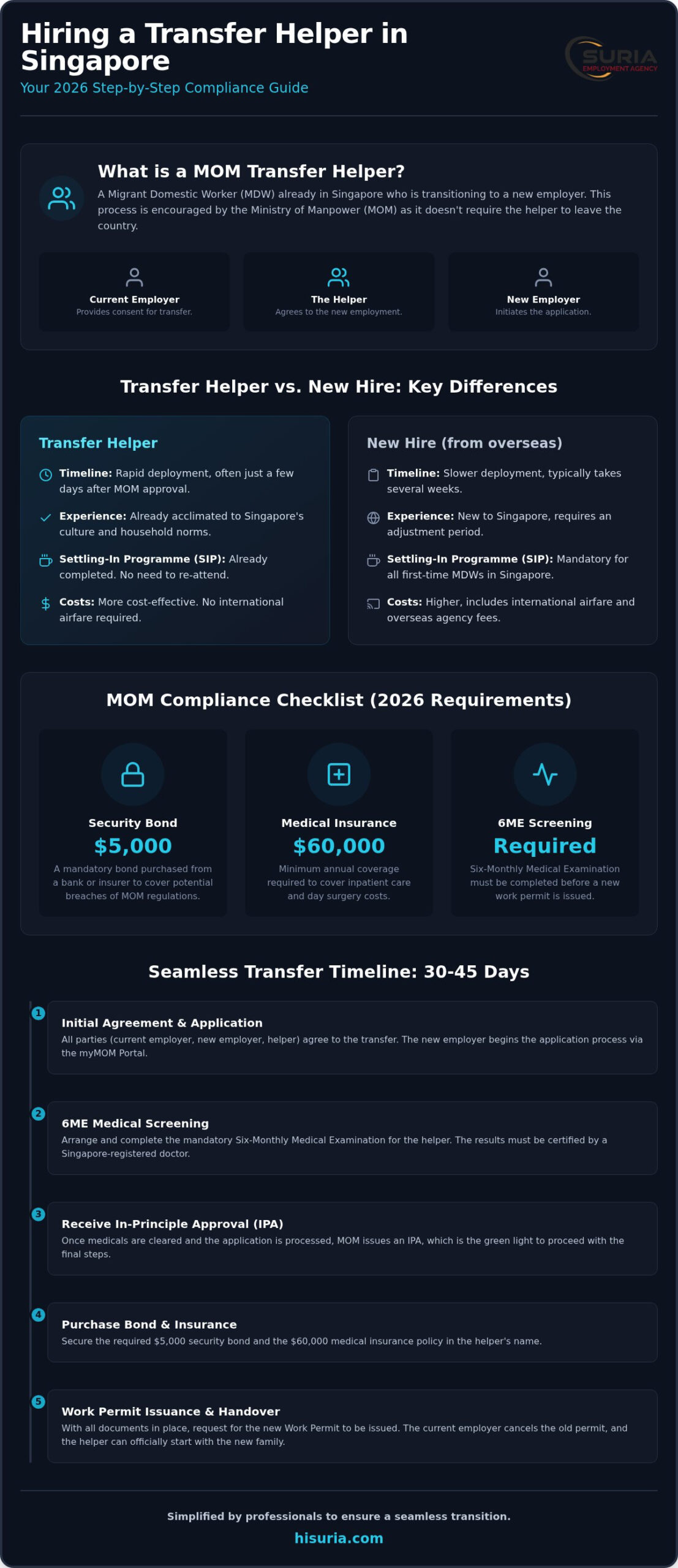
A mom transfer helper refers to one of many migrant domestic workers who are already residing in Singapore and choose to transition from their current employer to a new household. Unlike new hires brought in from overseas, these helpers don’t need to return to their home country before starting a new contract. This process involves a coordinated effort between three parties: the current employer providing consent, the new employer initiating the application, and the helper herself agreeing to the change.
The Ministry of Manpower (MOM) actively encourages this pathway to maintain a stable domestic workforce while reducing the logistical burdens of repatriation. By facilitating the hiring of a mom transfer helper, the system ensures that experienced help remains within the local ecosystem. This benefits families who require support without the long lead times associated with international recruitment.
The Benefits of Hiring a Transfer Helper
Choosing a transfer helper offers several practical advantages for busy households. The most significant benefit is immediate availability; since the helper is already in Singapore, you won’t face delays from overseas flight schedules or processing at training centers. These workers also possess proven local experience. They’re already acclimated to Singapore’s unique culture, grocery shopping norms, and household standards. Additionally, the transfer process allows for in-person interviews. You can meet candidates face-to-face to assess their personality and skills, ensuring a better fit for your family’s specific needs before making a formal commitment.
Transfer vs. New Hire: A Quick Comparison
When comparing a transfer to a new hire, the deployment timeline is the most striking difference. A transfer can often be finalized in just a few days once MOM approval is granted, whereas bringing in a new helper typically takes several weeks. New hires must also attend the mandatory Settling-In Programme (SIP) if it’s their first time working in Singapore. Transfer helpers have already completed this requirement, allowing them to focus entirely on their new duties from day one.
From a financial perspective, a transfer maid singapore is often the preferred choice for experienced employers. While there are still administrative fees, you avoid the heavy costs of international airfare and overseas documentation. This efficiency makes the transfer route a highly attractive option for families needing reliable help with minimal disruption.
Direct Transfer vs. Agency-Assisted: Choosing Your Path
Deciding how to proceed with a mom transfer helper usually comes down to how much time you can dedicate to administrative tasks. The Ministry of Manpower provides the FDW eService as the digital gateway for all transactions, but the technical steps require precision to avoid delays. Whether you manage the process yourself or seek professional help, understanding the legal weight of the transition is vital for a smooth handover. It’s not just about the paperwork; it’s about ensuring the helper is cared for throughout the entire change of employment.
When to Choose Direct Hire Services
Direct hiring is often a practical choice when you’ve identified a mom transfer helper through a trusted friend or a personal referral. Since you already have a relationship with the current employer, the initial trust is established. However, the administrative burden remains high. You’re responsible for managing IPA applications, purchasing the $5,000 security bond, and ensuring insurance coverage meets the 2026 minimum of $60,000. For families who find their own candidate but feel overwhelmed by the technical requirements, Suria’s direct hire maid service singapore provides a helpful middle ground by handling the compliance details on your behalf.
The Role of the Employment Agency (EA)
Many families prefer using a transfer maid agency singapore because it provides a layer of protection during the “holding” period. This is the delicate window when a helper’s old permit is cancelled but her new one isn’t yet active. During this time, the EA takes responsibility for providing acceptable accommodation and necessary medical treatment. If a helper needs to stay in a professional dormitory while the transfer is finalized, the agency manages these logistics directly, ensuring she has a safe place to reside.
The agency also serves as a repatriation safety net. If a transfer falls through unexpectedly, the EA handles the repatriation process, which protects you from the potential forfeiture of your security bond. They also monitor the helper’s Special Pass validity to ensure she remains in Singapore legally throughout the transition. If you’re feeling uncertain about these timelines, consulting with a licensed specialist can offer the clarity you need to move forward without worry. This expert guidance ensures that both your family’s interests and the helper’s welfare are prioritized at every step.
MOM Compliance Checklist: Medicals, Bonds, and Levies
Ensuring full compliance with Ministry of Manpower (MOM) regulations is the most critical part of hiring a mom transfer helper. While the process is faster than bringing in a new hire, the legal requirements are just as stringent. You must confirm that all medical screenings are current and that your financial guarantees are in place before the helper officially joins your household. Missing a single deadline can lead to complications with the work permit or even financial penalties.
Managing the 6ME and Health Screenings
Managing the 6ME and health screenings for a mom transfer helper starts with a quick check on the MOM portal. You should verify her medical status before finalizing any agreement. If her screening is due within the next few weeks, it’s often best to ensure it’s completed before the transfer begins. If a helper fails her 6ME during the transfer process, the application will be rejected, and she may need to be repatriated. This makes the health declaration in the In-Principle Approval (IPA) vital. You’re confirming she’s fit for work, which protects your family and the worker’s health.
Security Bonds and Insurance Discharge
The financial side of the transfer requires careful timing to avoid gaps in coverage. For 2026, the mandatory medical insurance coverage has been set at a minimum of $60,000 to better protect employers from high hospital bills. You must also secure a $5,000 security bond. The security bond is a legal guarantee to the Singapore government that the employer will comply with Work Permit conditions. Once the new Work Permit is successfully issued, the previous employer’s bond is typically discharged within one week.
Transitioning the insurance is a priority because the helper must be covered at all times. There shouldn’t be a single day where she’s uninsured during the move from one household to another. Regarding the foreign domestic worker levy, the transition is quite clear. The current employer stops paying the levy on the day the transfer is approved and the new permit is issued. From that day forward, the new employer takes over the monthly payment. Keeping these dates in mind helps you manage your household budget without any unexpected overlaps.
Step-by-Step Timeline for a Seamless Helper Transfer
Success with a mom transfer helper depends on a disciplined timeline. It’s not just about meeting legal requirements; it’s about managing the rhythm of two different households. Starting early ensures that you aren’t rushing through the myMOM Portal at the last minute. We recommend beginning your verification phase 30 to 45 days before the current permit expires. During this window, you should check the helper’s permit validity and confirm her 6ME status is up to date.
Once you’ve verified her details, the application phase must begin at least 30 days before the expiry date. Submit your transfer request via the FDW eService and obtain written consent from the current employer. Following approval, you’ll enter the preparation phase. This involves purchasing the mandatory insurance and signing the transfer maid process singapore documentation. After receiving the In-Principle Approval (IPA), you can move to the final steps: issuing the new Work Permit and receiving the physical card. The process officially concludes when you cut the old card and finalize her start date in your home.
Critical Deadlines to Remember
The 30-day rule is the most important deadline in this journey. Acting late can result in the helper having to be repatriated, which disrupts your plans and costs more money. If your specific situation is complex, you might need to request an extension from MOM to keep the helper in Singapore legally while the paperwork clears. For a deeper look at the technical requirements, our how to transfer maid to another employer singapore guide provides a detailed walkthrough of every digital step. If you’re worried about missing a date, let our experienced consultants manage the schedule for you.
The Handover Day: Best Practices
Handover day is more than just a physical move between houses. It’s a day for clear communication and closure. Ensure the previous employer has settled the helper’s final salary and any outstanding leave before she arrives at your door. This prevents future disputes and starts your relationship on a foundation of trust. During the first 48 hours, focus on setting clear expectations rather than assigning heavy tasks. Give her time to understand your home’s layout and routines, which helps her settle in with confidence and peace of mind.
Simplifying Your Journey with Suria Employment Agency
Founded in 2002, Suria Employment Agency has spent over two decades mastering the nuances of Singapore’s domestic labor market. We understand that hiring a mom transfer helper involves more than just a digital application; it’s about the security and comfort of your home. Our team handles the heavy lifting of Singpass logins, IPA applications, and bond purchases so you can focus on welcoming your new family member. We’ve navigated every regulatory shift since our inception, ensuring your household remains compliant with the latest 2026 MOM standards.
Why Experience Matters in Transfer Hiring
Experience becomes vital when you encounter complex cases like contract breaks or specific medical requirements. We act as a professional bridge between current and new employers, facilitating a “win-win” transfer that respects everyone’s needs. This mediation prevents misunderstandings and ensures a smooth handover. Our commitment to ethical recruitment means we strictly adhere to MOM licensing standards, protecting both the helper and your family. We don’t just process papers; we solve problems before they arise, acting as a protective mentor throughout the recruitment journey.
Successful placement requires more than just administrative accuracy. We prioritize expert matching to ensure the helper’s specific skills, whether in childcare or elderly support, align perfectly with your household’s unique demands. Our relationship doesn’t end when the helper arrives. We provide continuous post-placement support, assisting with future passport renewals, work permit renewals, and home leave processing. This long-term stability is why families have trusted us for over 20 years.
Getting Started with Your Transfer
Finding the right fit starts with a simple, transparent process. You can begin by browsing our curated mom transfer helper profiles to see candidates currently available in Singapore. Once you’ve identified potential matches, our consultants will guide you through a personalized discussion to understand your specific household requirements. We take the time to listen, ensuring every placement is a lasting success. Contact Suria Employment Agency to start your transfer helper search today and experience the peace of mind that comes with professional, compassionate support.
Ensuring a Smooth Transition for Your Household
Managing the 2026 Ministry of Manpower regulations doesn’t have to be a source of constant stress for your family. By understanding the critical 30-day timeline and the updated $60,000 insurance requirements, you’ve already taken the first step toward a successful hire. Whether you’re managing the process directly or seeking professional guidance, prioritizing compliance ensures your mom transfer helper can focus on what matters most; providing high-quality care for your home and loved ones.
Suria Employment Agency stands as a stable partner for families, offering 20+ years of MOM-licensed expertise. We take the administrative burden off your shoulders with comprehensive documentation and bond management. Having been trusted by thousands of Singaporean households, we ensure every detail is handled with precision. You deserve a home environment that’s peaceful, predictable, and well-supported.
Secure Your Family’s Future with Suria Employment Agency. Let’s start this journey together today.
Frequently Asked Questions
Can I hire a transfer helper if her current employer does not give consent?
No, you cannot hire a mom transfer helper without the written consent of her current employer in most cases. The current employer must agree to release the worker via the MOM eService portal. If the helper’s contract is finishing naturally, the process is simpler; however, a transfer initiated mid-contract always requires a mutual agreement. This ensures a fair transition for all parties and prevents sudden disruptions in household support.
Who pays for the helper’s medical insurance during a transfer?
The new employer is responsible for purchasing the mandatory medical insurance once the transfer is approved. For 2026, you must ensure the policy provides at least $60,000 in coverage. This insurance must be active before the new Work Permit is issued. The previous employer’s responsibility ends only when their permit is cancelled and the new employer’s bond and insurance take effect, ensuring the helper remains protected throughout the move.
How long does the entire MOM transfer process take in 2026?
The entire mom transfer helper process typically takes between one and four weeks to complete. This timeline depends on how quickly the current employer provides consent and how fast the new In-Principle Approval is granted. Once the approval is received and insurance is secured, the issuance of the new Work Permit can happen in just a few days. Starting the process at least 30 days before permit expiry is recommended.
What happens to the security bond if the transfer is unsuccessful?
If a transfer is unsuccessful, the current employer remains legally responsible for the helper and their $5,000 security bond. The bond is only discharged once the helper is successfully transferred to a new employer or repatriated to her home country. If the helper is sent home, the current employer must pay for the airfare. Working with an agency like Suria helps mitigate these risks by ensuring all regulatory steps are followed correctly.
Is the new employer responsible for the helper’s previous medical bills?
No, the new employer is not responsible for any medical expenses incurred before the official transfer date. The previous employer must settle all outstanding medical bills and ensure the helper’s 6-monthly medical examination is up to date before the handover. Once the new Work Permit is issued and your $60,000 medical insurance policy is active, you become responsible for any new health-related costs that arise during her employment with your family.
Can a transfer helper start working before the new Work Permit is issued?
No, it is illegal for a helper to start working for a new household before her new Work Permit is issued. The helper must remain with her current employer or stay at an approved dormitory until the Ministry of Manpower officially approves the transfer and issues the new permit. Engaging a helper prematurely can lead to severe fines and the forfeiture of your security bond. Always wait for the official notification from the MOM eService.
What is the difference between a direct hire and an agency transfer?
A direct hire requires the employer to manage all MOM applications, insurance purchases, and bond documentation independently. In contrast, a mom transfer helper placement through Suria Employment Agency provides a full-service experience. We handle the technical paperwork, provide professional mediation between employers, and offer temporary accommodation for the helper if needed. Using an agency reduces administrative stress and ensures your household remains fully compliant with the evolving 2026 labor regulations.
Do I need to pay the maid levy during the transfer period?
You only begin paying the monthly maid levy once the helper’s new Work Permit is issued in your name. The previous employer is responsible for the levy until the day the transfer is officially finalized. MOM’s system automatically calculates the transition date, so you don’t have to worry about overlapping payments. If you qualify for a concessionary rate, ensure your status is updated in the system to pay the lower $60 monthly fee.